

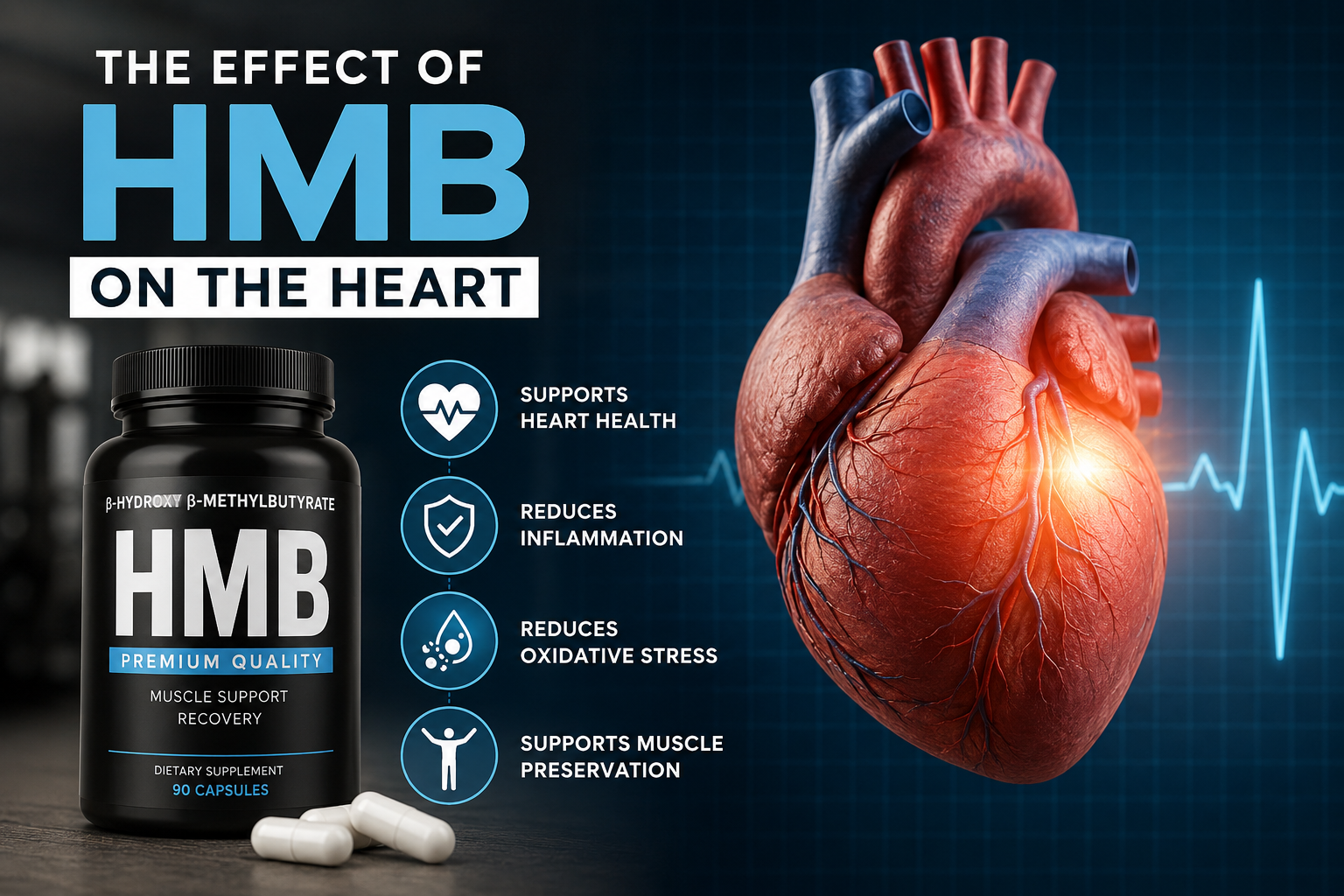
In recent years, HMB (β-Hydroxy β-Methylbutyrate) has become a widely used supplement in the fitness and health world. It’s popular among athletes, gym-goers, and even older adults looking to preserve muscle mass and improve recovery.
HMB is a natural metabolite of the amino acid leucine, which plays a key role in muscle protein synthesis. Its main reputation comes from its ability to reduce muscle breakdown and support recovery, especially during intense training or calorie restriction.
But as its popularity grows, a fair question comes up:
Does HMB have any effect on the heart?
Is it completely safe for cardiovascular health, or could it influence heart function in some way?
To answer that properly, we need to look at how HMB works inside the body and how it may indirectly interact with the cardiovascular system.
How HMB Works in the Body
To understand the potential heart-related effects of HMB, we first need to understand its biological role.
HMB is produced in small amounts when the body breaks down leucine. However, in supplement form, it is taken in much higher and more effective doses.
Its main functions include:
- Reducing muscle protein breakdown (anti-catabolic effect)
- Supporting lean muscle retention during stress or dieting
- Enhancing post-exercise recovery
- Decreasing exercise-induced muscle damage
- Supporting overall protein balance in the body
Most of these effects are focused on skeletal muscle, but HMB also influences broader systems in the body, including:
- Inflammation pathways
- Oxidative stress levels
- Cellular repair processes
- Energy metabolism
And these systems are closely connected to cardiovascular health.
Why the Heart Is Connected to Muscle Metabolism
The heart is a unique muscle that works continuously without rest. Unlike skeletal muscles, it requires:
- Constant oxygen supply
- Stable energy production (ATP)
- Efficient nutrient delivery
- Low levels of inflammation
- Balanced oxidative stress response
Because of this, anything that affects metabolic stress, inflammation, or cellular recovery can potentially influence heart performance — even if indirectly.
HMB is not a stimulant or cardiovascular drug, but its influence on muscle metabolism and recovery has led researchers to explore whether it might also impact heart health in subtle ways.
Early Insights Into HMB and Cardiovascular Health
Although research is still developing, early studies and biological models suggest that HMB may have several indirect effects related to heart health.
1. Reduction in Systemic Inflammation
Chronic inflammation is one of the key contributors to cardiovascular disease. Some research suggests that HMB may help reduce inflammatory markers in the body, especially during physical stress such as intense training or illness recovery.
While this does not mean HMB is an anti-inflammatory drug, it may support a more balanced inflammatory response under stress conditions.
2. Lower Oxidative Stress
Oxidative stress occurs when the body produces more free radicals than it can neutralise. Over time, this can damage blood vessels and contribute to heart disease.
Some studies indicate that HMB may help reduce oxidative stress indirectly by improving cellular efficiency and reducing muscle damage after exercise.
This could create a more protective internal environment for cardiovascular tissues.
3. Improved Recovery and Reduced Physiological Strain
Intense exercise places temporary stress not only on muscles but also on the cardiovascular system.
By reducing muscle damage and speeding up recovery, HMB may help the body return to a stable resting state more quickly. This could indirectly reduce overall physiological strain, including on the heart.
Does HMB Directly Affect the Heart?
This is an important point that needs to be clear.
Based on current scientific evidence:
- HMB is not a stimulant
- It does not directly increase heart rate
- It does not significantly raise blood pressure
- It does not activate the nervous system like caffeine or pre-workouts
In other words, HMB does not appear to directly stimulate cardiovascular activity in a way that would raise immediate concerns.
However, that does not mean it is completely unrelated to heart health — its metabolic effects can still have indirect influence over time.
HMB in Exercise and Cardiovascular Demand
During intense training, the heart naturally works harder to supply oxygen and nutrients to muscles.
This leads to:
- Temporary increase in heart rate
- Higher oxygen demand
- Increased cardiovascular workload
- Post-exercise inflammatory response
HMB may help reduce the severity of muscle damage and improve recovery speed, which could indirectly reduce overall stress on the body after training sessions.
However, it is important to understand that this effect is supportive, not directly cardiac.
Summary
To summarise this section:
- HMB is a leucine-derived compound mainly used for muscle preservation
- Its main role is anti-catabolic and recovery support
- It affects inflammation, oxidative stress, and metabolism
- It does not directly stimulate or stress the heart
- Any cardiovascular effects are likely indirect and secondary
The Effect of HMB on the Heart | Clinical Evidence & Cardiovascular Markers
Introduction: From Mechanism to Human Evidence
we explored how HMB works in the body and why it might indirectly influence heart health through inflammation, oxidative stress, and recovery.
Now we move into the more important question:
What does real human research say about HMB and cardiovascular health?
This is where theory meets clinical evidence — and where things become more nuanced. While HMB is well-studied for muscle health, its direct impact on the heart is still an emerging research area.
Let’s break it down clearly based on current scientific findings.
HMB and Blood Pressure: What the Research Shows
One of the first concerns people have is whether HMB affects blood pressure.
Across available human studies, the findings are quite consistent:
- HMB does not significantly increase blood pressure in healthy individuals
- No evidence shows hypertensive effects (high blood pressure) from standard dosing
- Cardiovascular stability remains unchanged during supplementation
Unlike stimulants such as caffeine or fat burners, HMB does not activate the sympathetic nervous system in a way that would elevate heart rate or blood pressure.
👉 In simple terms:
HMB is considered cardiovascular-neutral when it comes to blood pressure regulation.
Some small studies even suggest slight improvements in vascular function, but the evidence is not strong enough yet to make therapeutic claims.
HMB and Cholesterol Levels
Another key area of interest is whether HMB influences cholesterol or lipid profiles.
Current research shows:
- No consistent increase in LDL (bad cholesterol)
- No harmful changes in triglyceride levels
- HDL (good cholesterol) remains stable in most cases
- Some minor improvements reported in specific populations, but not universal
It is important to be clear here:
👉 HMB is not a cholesterol-lowering supplement like omega-3 or medication-based treatments.
Its effects on lipid metabolism appear to be indirect, likely related to improved metabolic efficiency and reduced muscle breakdown rather than direct liver or lipid pathway modulation.
Inflammation and Heart Disease Risk
Chronic inflammation is one of the strongest risk factors for cardiovascular disease.
Markers such as:
- C-reactive protein (CRP)
- Interleukin-6 (IL-6)
- Tumor necrosis factor-alpha (TNF-α)
are commonly linked with higher heart disease risk.
Some studies suggest that HMB may help reduce inflammation under certain conditions, especially:
- Intense physical training
- Muscle damage and recovery phases
- Age-related muscle loss (sarcopenia)
However, it’s important to stay accurate:
👉 HMB is not an anti-inflammatory medication, but it may help support a lower inflammatory response during physical stress.
This indirect effect is one of the most interesting potential links between HMB and cardiovascular health.
HMB and Blood Vessel Health (Endothelial Function)
A more advanced area of research involves endothelial function — the health of the inner lining of blood vessels.
Healthy endothelial function is critical for:
- Proper blood flow
- Blood pressure regulation
- Oxygen delivery efficiency
- Prevention of arterial stiffness
Some experimental data suggests HMB may indirectly support endothelial health by reducing oxidative stress and muscle damage.
Why does this matter?
Because oxidative stress contributes to:
- Plaque buildup in arteries (atherosclerosis)
- Reduced blood flow efficiency
- Increased cardiovascular strain over time
By improving recovery and reducing systemic stress, HMB may contribute to a healthier vascular environment — although this is still an indirect and not fully proven mechanism.
HMB in Older Adults and Clinical Settings
Interestingly, some of the strongest evidence for HMB comes not from athletes, but from older adults and clinical populations.
1. Ageing and Muscle Loss (Sarcopenia)
As people age, they naturally lose muscle mass, which can negatively impact:
- Mobility
- Metabolic health
- Cardiovascular efficiency
Studies show that HMB can help:
- Reduce muscle loss
- Maintain strength
- Improve physical function
Why this matters for the heart:
Better muscle mass supports better circulation and overall cardiovascular efficiency, especially in older populations.
2. Hospitalised or Immobilised Patients
HMB has also been studied in patients recovering from illness, surgery, or inactivity.
Findings suggest:
- Reduced muscle wasting during bed rest
- Improved recovery outcomes
- Better metabolic stability
These effects can indirectly reduce cardiovascular strain, especially in vulnerable individuals who are at higher risk of complications.
Comparison With Other Supplements
To better understand HMB’s cardiovascular profile, it helps to compare it with other common supplements.
HMB vs Creatine
- Creatine: supports energy production and strength
- HMB: reduces muscle breakdown and supports recovery
👉 Both are considered safe for heart health in healthy individuals.
HMB vs Stimulant Pre-Workouts
- Stimulants (caffeine, synephrine): increase heart rate and blood pressure
- HMB: non-stimulant, no acute cardiovascular activation
👉 HMB is significantly more stable and heart-friendly.
HMB vs Leucine
- Leucine: stimulates muscle protein synthesis
- HMB: reduces muscle breakdown more strongly
Both are related, but HMB has a more anti-catabolic focus.
Limitations of Current Research
Despite promising findings, there are important limitations:
- Most studies are short-term
- Limited direct research on heart disease patients
- Small sample sizes in many trials
- Cardiovascular outcomes are often secondary, not primary endpoints
This means:
👉 We cannot yet classify HMB as a proven heart-protective supplement — only as a metabolically safe one with potential indirect benefits.
Summary
Here’s the key takeaway from this section:
- HMB does not raise blood pressure
- It has no harmful effect on cholesterol levels
- It may reduce inflammation under physical stress
- It could support vascular health indirectly via oxidative stress reduction
- It is well tolerated in elderly and clinical populations
- Overall, HMB appears cardiovascular-neutral with potential indirect benefits
The Effect of HMB on the Heart | Long-Term Safety, Risks & Final Conclusion
Introduction: The Long-Term Question Everyone Asks
Is HMB safe for the heart in the long run, and are there any hidden cardiovascular risks?
This matters because many supplements look safe short-term but can behave differently over long-term use. So let’s break it down in a clear, evidence-based way.
Long-Term Safety of HMB for Heart Health
One of the strongest advantages of HMB is its excellent safety profile in human studies.
Across clinical trials and long-term supplementation studies, HMB has shown:
- No evidence of heart toxicity
- No negative effects on heart rhythm
- No increase in resting heart rate
- No harmful changes in blood pressure over time
- No signs of cardiac overload in healthy users
Unlike stimulant-based supplements, HMB does not push the cardiovascular system into a heightened state.
👉 In simple terms:
HMB does not stress the heart directly, even with continued use.
Does Long-Term Use Change Heart Function?
Based on available research, long-term supplementation shows:
- Stable heart rate over time
- No upward trend in blood pressure
- No structural heart damage reported
- No evidence of cardiovascular strain accumulation
This is important because some compounds may appear safe in short cycles but show issues with prolonged use. HMB does not currently show this pattern.
However, it’s also important to be scientifically honest:
👉 Long-term studies beyond several months to a few years are still limited.
So while current evidence is very reassuring, absolute certainty is not yet possible.
Possible Indirect Risks (What People Should Understand)
Although HMB itself is considered safe, there are some indirect considerations worth noting.
1. Over-Reliance on Supplements
Some users may rely too much on supplements and neglect the foundations of heart health:
- Balanced diet
- Regular cardiovascular exercise
- Stress management
- Quality sleep
HMB cannot replace these factors. If lifestyle is poor, cardiovascular risk still increases regardless of supplementation.
2. Unnecessary High Dosages
Most research supports a standard dose of:
- Around 3 grams per day
Taking more than this:
- Does not significantly increase benefits
- Has no proven cardiovascular advantage
- May increase cost without added value
While not considered toxic, excessive use is unnecessary.
3. Misattribution in Supplement Stacking
HMB is often used alongside:
- Caffeine-based pre-workouts
- Creatine
- Protein supplements
- Fat burners
If someone experiences increased heart rate or palpitations, HMB is usually not the cause — stimulants in the stack are far more likely responsible.
This is a common misunderstanding in real-world use.
HMB in Heart Patients: Is It Safe?
Current evidence suggests:
- Generally well tolerated in older adults
- Used safely in rehabilitation and clinical nutrition settings
- No direct contraindications reported for stable cardiovascular patients
However:
👉 Anyone with serious heart conditions should consult a medical professional before supplementation.
This is not because HMB is dangerous, but because clinical conditions require personalised supervision.
Real-World Use Cases
1. Athletes
For athletes, HMB is mainly used for:
- Faster recovery
- Reduced muscle breakdown
- Improved training consistency
Cardiovascular impact in this group is:
👉 Neutral, with no direct heart stimulation.
2. General Fitness Users
For everyday users:
- Supports lean muscle maintenance
- Helps during calorie restriction
- Does not increase cardiovascular stress
It is considered safe when used within recommended doses.
3. Older Adults
This is one of the most important groups studied.
HMB helps:
- Reduce age-related muscle loss (sarcopenia)
- Improve mobility and strength
- Support functional independence
Why this matters for the heart:
Better muscle mass improves circulation efficiency and reduces frailty-related cardiovascular strain.
So here, the benefit is indirect but meaningful.
Final Scientific Conclusion: Is HMB Good or Bad for the Heart?
Let’s summarise everything clearly based on current evidence.
✔ Positive Findings
- No heart toxicity
- No increase in blood pressure
- No increase in heart rate
- No stimulant effect
- Possible reduction in inflammation and oxidative stress
- Good safety profile in humans
⚖ Neutral Findings
- No strong direct effect on cholesterol
- No proven cardiovascular disease prevention
- No direct heart-strengthening effect
❗ Unknowns
- Long-term studies over many years are still limited
- Direct cardiovascular disease outcomes are not fully studied
- Effects in high-risk cardiac patients need more research
Final Verdict (Simple and Honest)
👉 Based on current science:
HMB is best described as a cardiovascular-neutral supplement with potential indirect supportive benefits, rather than a direct heart-acting compound.
It does not stimulate the heart, does not strain the cardiovascular system, and does not show harmful effects in healthy individuals at recommended doses.
Final Thoughts
If your goal is:
- Muscle preservation
- Faster recovery
- Safe long-term supplementation
Then HMB is considered a low-risk and heart-friendly option in healthy users.
However, it is not a cardiovascular treatment or heart-protection drug — its benefits are indirect and supportive, not therapeutic.