

Spirulina: A Science-Based Guide to Nutrition, Benefits, Dosage and Safety
Spirulina has become one of the most recognisable superfood supplements in the world. Often described as a blue-green algae, spirulina is actually a type of photosynthetic cyanobacterium, best known scientifically under the genus Arthrospira. It has attracted significant attention because of its high protein content, distinctive pigments, minerals and other bioactive compounds.
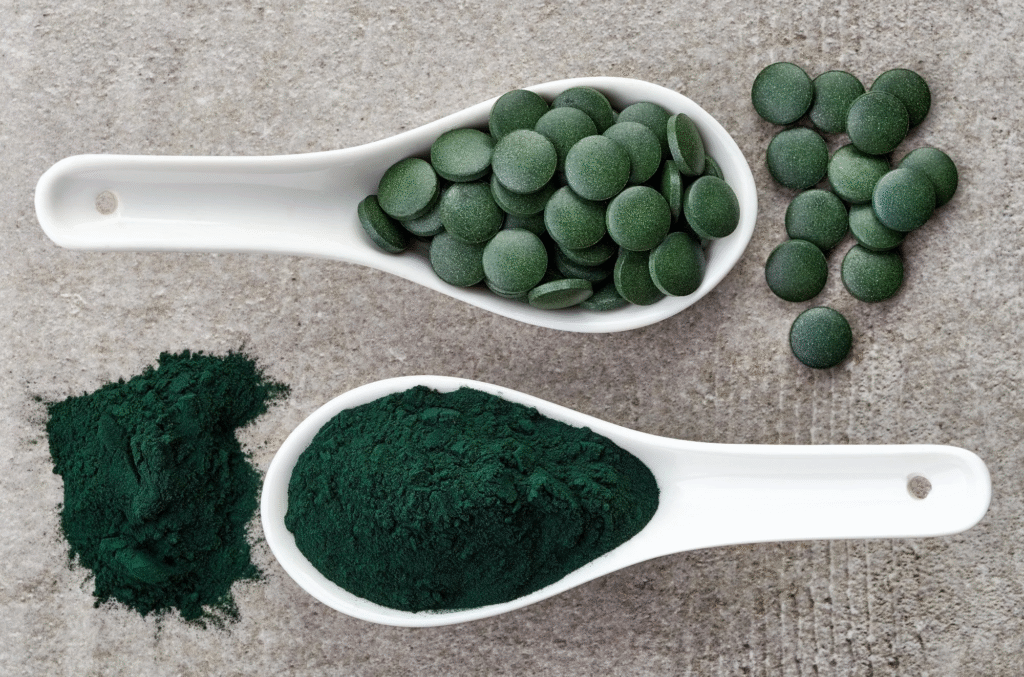
Today, spirulina is available as powder, tablets and capsules and is commonly used by people interested in plant-based nutrition, sports nutrition, general wellness and nutrient-dense supplementation.
But there is a major difference between the way spirulina is marketed and what scientific research actually demonstrates.
Some human studies suggest that spirulina may have beneficial effects on certain cardiometabolic markers, including blood lipids and blood pressure. Research has also investigated its potential effects on exercise performance, oxidative stress and immune-related outcomes. However, evidence varies considerably between health outcomes, and spirulina should not be considered a treatment or cure for disease.
There is also an important safety consideration: the quality and source of spirulina matter. Poorly controlled production can increase the risk of contamination with unwanted microorganisms, heavy metals or cyanotoxins.
This comprehensive guide explains what spirulina is, what it contains, what the research says about its potential benefits, how it is commonly used, and what consumers should know before choosing a spirulina supplement.
What Is Spirulina?
Spirulina is commonly called a blue-green algae, but scientifically it belongs to the cyanobacteria rather than the true algae.
The organisms used commercially are generally associated with Arthrospira platensis and Arthrospira maxima. They are microscopic, photosynthetic organisms that can grow in alkaline water under controlled cultivation conditions.
Their characteristic blue-green colour comes from a combination of natural pigments, particularly phycocyanin, chlorophyll and carotenoid compounds.
Spirulina has a long history of human consumption. Historical records describe the harvesting and consumption of cyanobacterial biomass around Lake Texcoco in Mexico, while Arthrospira has also traditionally been collected and consumed around Lake Chad in Africa.
Modern spirulina production is very different from traditional harvesting. Commercial manufacturers generally cultivate the organism in controlled ponds or tanks, then harvest, wash, dry and process the biomass into a stable food or supplement ingredient.
Spirulina Nutritional Profile
One of spirulina’s main attractions is its relatively high concentration of protein and other nutrients by dry weight.
However, the exact nutritional composition varies according to the species, cultivation conditions, harvesting method, drying process and final product.
Protein
Spirulina is particularly rich in protein.
On a dry-weight basis, protein commonly represents a substantial proportion of spirulina biomass, although the exact percentage varies between products.
It contains all nine essential amino acids, which means that the protein provides the essential amino acid components required by humans.
However, describing spirulina simply as being “equivalent to animal protein” is an oversimplification.
Protein quality depends not only on whether all essential amino acids are present, but also on their relative proportions, digestibility and the amount consumed.
For this reason, spirulina can be a useful protein-containing food or supplement, particularly within plant-based diets, but it should not automatically be treated as a complete replacement for conventional high-protein foods.
Does Spirulina Contain Vitamin B12?
This is one of the most important misconceptions about spirulina.
Spirulina products are sometimes promoted as an excellent vegan source of vitamin B12. However, the scientific evidence does not support relying on spirulina as a dependable source of biologically active vitamin B12.
Research has found that a significant proportion of the B12-like compounds detected in spirulina can consist of pseudovitamin B12, which does not provide the same nutritional function as active human vitamin B12.
Therefore:
Spirulina should not be used as a reliable replacement for a clinically appropriate vitamin B12 supplement.
This is particularly important for people following vegan or vegetarian diets who may have an increased risk of inadequate B12 intake.
Other Nutrients and Bioactive Compounds
Depending on the product, spirulina can provide:
- Protein
- Iron
- Copper
- Some B-group vitamins
- Carotenoids
- Chlorophyll
- Phycocyanin
- Gamma-linolenic acid (GLA)
- Other bioactive compounds
The amount of each nutrient can vary substantially between products.
Therefore, the nutrition panel on the actual product should always be used when determining its nutritional contribution rather than relying solely on generic descriptions of spirulina.
Phycocyanin: Spirulina’s Signature Pigment
One of the most interesting compounds in spirulina is phycocyanin.
Phycocyanin is a blue protein-pigment complex that contributes to spirulina’s distinctive colour.
Laboratory and preclinical research has investigated phycocyanin for antioxidant and anti-inflammatory activity.
However, there is an important distinction between laboratory findings and clinical outcomes.
The fact that a compound demonstrates antioxidant activity in a laboratory does not automatically mean that consuming a spirulina supplement will prevent disease in humans.
For this reason, phycocyanin is best described as a biologically active component of spirulina rather than a proven treatment for inflammation or chronic disease.
Potential Health Benefits of Spirulina
1. May Support Cardiometabolic Health
Cardiometabolic health is one of the areas where human research on spirulina has become particularly interesting.
A 2025 systematic review and meta-analysis examined 35 randomised controlled trials and reported improvements in several markers, including triglycerides, total cholesterol, LDL cholesterol, HDL cholesterol, fasting blood glucose, HOMA-IR and blood pressure. However, the certainty of evidence varied between outcomes, with some measures receiving low-quality evidence.
Another meta-analysis of 20 randomised controlled trials involving more than 1,000 participants found statistically significant improvements in total cholesterol, LDL cholesterol, triglycerides and HDL cholesterol following spirulina supplementation.
These findings are promising, but they do not mean that spirulina can replace cholesterol-lowering medication, blood-pressure medication or diabetes treatment.
A better interpretation is that spirulina may have a supportive role in overall nutritional and cardiometabolic health, particularly when combined with an appropriate diet and lifestyle.
2. May Help Maintain Healthy Cholesterol Levels
Several clinical trials have investigated spirulina supplementation in people with elevated lipid levels.
A 2023 GRADE-assessed systematic review and dose-response meta-analysis found that spirulina supplementation was associated with reductions in LDL cholesterol, total cholesterol and triglycerides, while HDL cholesterol increased modestly.
The important point is that the research measures changes in biomarkers.
A lower LDL cholesterol measurement is not the same thing as proving that spirulina prevents heart attacks or cardiovascular disease.
Long-term outcome trials would be required to establish that type of clinical benefit.
3. May Support Healthy Blood Pressure
Blood pressure is another area with relatively encouraging evidence.
A 2025 GRADE-assessed meta-analysis of randomised controlled trials found that spirulina supplementation reduced systolic blood pressure by approximately 4.4 mmHg and diastolic blood pressure by approximately 2.8 mmHg compared with control groups. The evidence was rated as moderate quality, although the researchers noted limitations related to the number and size of available trials.
A newer 2025 systematic review of edible algae also found reductions in blood pressure, with spirulina showing one of the larger effects among the algae studied.
Nevertheless, people with hypertension should not stop or reduce prescribed medication because they begin taking spirulina.
If spirulina is used alongside blood-pressure medication, monitoring is sensible because combining several interventions that lower blood pressure may increase the possibility of blood pressure becoming too low in some individuals.
4. May Support Blood Glucose Regulation
Researchers have also investigated spirulina in people with metabolic syndrome, insulin resistance and related conditions.
A systematic review and meta-analysis of randomised controlled trials reported reductions in fasting plasma glucose and insulin concentrations in people with metabolic syndrome and related disorders.
More recent evidence has continued to investigate spirulina’s effects on glucose regulation, although results are not uniform across every population and study design.
This means spirulina may be an interesting complementary nutritional intervention, but it should not be presented as a treatment for diabetes.
People taking insulin or glucose-lowering medication should discuss supplementation with a healthcare professional rather than using spirulina as a substitute for established treatment.
5. May Support Exercise and Physical Performance
Spirulina has become popular among athletes because of its protein content, pigments and antioxidant compounds.
Research has investigated whether supplementation can influence:
- Exercise fatigue
- Endurance
- Oxidative stress
- Muscle performance
- Recovery
- Body composition
Some studies have reported potentially beneficial effects, but the evidence is not strong enough to conclude that spirulina is a reliable performance-enhancing supplement for every athlete.
A balanced diet containing sufficient protein, carbohydrate, micronutrients and total energy remains much more important for performance.
Spirulina can be considered a nutritional addition rather than a replacement for a properly designed sports nutrition programme.
6. Antioxidant Activity
Oxidative stress occurs when the production of reactive molecules exceeds the body’s ability to neutralise them.
Spirulina contains several compounds with antioxidant activity, including phycocyanin and carotenoids.
This has generated considerable scientific interest.
However, claims such as “spirulina removes free radicals and prevents cancer” go beyond the available human evidence.
Antioxidant activity observed in laboratory experiments does not automatically translate into disease prevention in humans.
Therefore, spirulina’s antioxidant properties should be regarded as a potential biological characteristic rather than a proven medical effect.
7. Immune System Research
Spirulina has also been studied for its possible effects on immune-related markers.
Some experimental and small human studies have reported changes in immune responses following spirulina consumption.
However, evidence is not sufficient to claim that spirulina prevents infections, strengthens immunity in all individuals or treats immune-related diseases.
A healthy immune system depends on many factors, including adequate nutrition, sleep, physical activity, vaccination where appropriate and management of underlying health conditions.
8. Does Spirulina Detox the Body?
One of the most common marketing claims is that spirulina “detoxifies” the body.
This statement requires clarification.
The human body already has highly developed systems for processing and eliminating many substances, primarily through the liver, kidneys, gastrointestinal tract and lungs.
Although some laboratory research has investigated the ability of spirulina or its components to interact with certain compounds, this does not establish that taking spirulina performs a general “detox” of the human body.
Therefore, claims that spirulina “cleans the blood”, “removes all toxins” or “detoxifies the liver” should be treated with caution.
Spirulina and Heavy Metals
Another common claim is that spirulina binds heavy metals and removes them from the body.
Laboratory research has investigated the adsorption and binding properties of algal biomass, but these findings should not be interpreted as evidence that consumers can safely use spirulina to treat heavy-metal poisoning.
In fact, product quality is particularly important because poorly controlled algal products themselves may contain contaminants.
For suspected heavy-metal exposure, proper medical testing and evidence-based treatment are required.
Spirulina Dosage: How Much Should You Take?
There is no single universally established clinical dose of spirulina that applies to everyone.
Human studies have used a wide range of doses and intervention periods.
For example, clinical trials included in previous meta-analyses have used approximately 1–19 grams per day, with study durations ranging from several weeks to several months.
This does not mean that 19 grams per day is an appropriate routine dose.
The amount a person should consume depends on:
- The form of the product
- Product concentration
- Individual nutritional needs
- The purpose of supplementation
- Other foods and supplements consumed
- Existing medical conditions
- Medications
For a commercial product, the manufacturer’s recommended serving should generally be followed unless a qualified healthcare professional recommends otherwise.
Spirulina Powder vs Tablets vs Capsules
Spirulina is commonly sold in three forms.
Spirulina Powder
Powder is versatile and can be mixed into:
- Smoothies
- Yoghurt
- Juices
- Protein shakes
- Energy balls
- Other foods
Its main disadvantage is the strong earthy or marine flavour.
Spirulina Tablets
Tablets are convenient and make it easier to measure a consistent serving.
They are particularly useful for consumers who dislike the flavour of spirulina powder.
Spirulina Capsules
Capsules offer another convenient option and can be easier to incorporate into a daily supplement routine.
Regardless of the format, the quality of the raw material matters more than whether the product is a powder, tablet or capsule.
When Is the Best Time to Take Spirulina?
There is no scientifically established “best time” of day for spirulina.
It can generally be incorporated into a person’s routine at a time that is convenient and well tolerated.
Some people prefer taking it with food, while others add the powder to a morning smoothie.
Consistency is generally more practical than focusing on a specific hour of the day.
Spirulina Safety: What You Need to Know
Spirulina is generally well tolerated when produced under controlled conditions, but “natural” does not mean “risk-free.”
Potential mild side effects may include:
- Bloating
- Nausea
- Diarrhoea
- Stomach discomfort
- Headache
People with allergies to spirulina or related ingredients may also experience allergic reactions.
The most important safety issue, however, is product contamination.
Why Product Quality Matters
Spirulina is cultivated in aquatic environments, and the production environment must be carefully controlled.
Poor-quality or contaminated products may contain:
- Microcystins
- Unwanted cyanobacteria
- Heavy metals
- Microbial contaminants
- Other environmental contaminants
The U.S. FDA specifically warns about microcystin contamination in certain blue-green algae products. Microcystins are toxins that can cause liver and kidney damage at significant exposure levels.
Research has also detected microbial and cyanotoxin concerns in some commercially available spirulina products, highlighting the importance of controlled production and appropriate quality testing.
This is why consumers should choose products from manufacturers that can demonstrate appropriate quality-control procedures and batch testing.
What Should You Look for in a High-Quality Spirulina Supplement?
A quality-focused spirulina product should ideally provide clear information about:
1. Botanical identity
The label should identify the organism used, rather than simply stating “blue-green algae”.
2. Country or source of cultivation
Transparent sourcing provides useful information about the production chain.
3. Batch testing
Look for evidence of appropriate testing for contaminants.
4. Heavy metal testing
Testing for contaminants such as lead, arsenic, mercury and cadmium can be important for quality assurance.
5. Cyanotoxin testing
Microcystin testing is particularly relevant to blue-green algae products.
6. Microbiological testing
Quality control should also consider microbial contamination.
7. Accurate labelling
The label should clearly state the quantity of spirulina per serving and provide appropriate ingredient and usage information.
Who Should Be Cautious With Spirulina?
Certain people should seek professional advice before using spirulina.
This includes individuals with:
- Autoimmune disorders
- Phenylketonuria (PKU)
- Significant allergies
- Chronic medical conditions
- Complex medication regimens
People with PKU should be particularly cautious because spirulina contains protein and therefore phenylalanine.
Individuals with autoimmune conditions should also discuss its use with their healthcare professional because immune-modulating effects have been investigated, while the clinical significance remains uncertain.
Spirulina During Pregnancy and Breastfeeding
Evidence regarding the safety of supplemental spirulina during pregnancy and breastfeeding is limited.
For this reason, pregnant or breastfeeding women should discuss spirulina supplementation with a qualified healthcare professional before use.
This is especially important when the product is being consumed in concentrated supplemental quantities rather than as a small food ingredient.
Is Spirulina Safe for Long-Term Use?
There is no simple yes-or-no answer.
Controlled clinical studies have generally reported good tolerability, but studies differ considerably in product quality, dose and duration.
More importantly, long-term safety depends partly on the quality and purity of the product being consumed.
A high-quality spirulina produced under controlled conditions is fundamentally different from an unverified product with no meaningful contaminant testing.
Therefore, long-term use should focus not only on the amount consumed but also on source, purity, manufacturing standards and individual health circumstances.
Spirulina and Vitamin B12: An Important Warning for Vegans
Because spirulina is plant-based and contains B12-like compounds, it is sometimes marketed as an ideal vegan B12 source.
This is misleading.
Research has shown that pseudovitamin B12 can represent a major proportion of the B12-like compounds in spirulina, making it unsuitable as a dependable B12 source.
For people who follow vegan diets, a properly formulated vitamin B12 supplement or fortified food is a much more reliable strategy.
Spirulina can still be included for its protein and other nutritional compounds, but it should not be counted on to meet vitamin B12 requirements.
Spirulina vs Chlorella: What’s the Difference?
Spirulina and chlorella are often grouped together because both are marketed as nutrient-dense microalgal supplements.
However, they are biologically different.
| Feature | Spirulina | Chlorella |
|---|---|---|
| Biological classification | Cyanobacterium | Green microalga |
| Typical colour | Blue-green | Green |
| Notable pigment | Phycocyanin | Chlorophyll |
| Protein | High | High |
| B12 reliability | Not a dependable source | Product-dependent; supplementation should be assessed carefully |
| Common forms | Powder, tablets, capsules | Powder, tablets, capsules |
| Main commercial use | Nutrition and functional food | Nutrition and functional food |
Neither should be viewed as a miracle supplement.
The most appropriate choice depends on nutritional goals, product quality and individual dietary requirements.
Is Spirulina a Superfood?
The word “superfood” is primarily a marketing and consumer term rather than a formal scientific classification.
Spirulina certainly has an impressive nutritional profile, particularly because it provides a concentrated source of protein and several bioactive compounds.
But calling it a “superfood” should not imply that it can replace a balanced diet.
A healthy dietary pattern still depends on a wide range of foods, including vegetables, fruits, whole grains, legumes, nuts, seeds and appropriate protein sources.
Think of spirulina as a nutrient-dense supplement or food ingredient, not as a nutritional shortcut.
Spirulina for Athletes and Active Adults
For athletes, spirulina may be attractive because it combines protein with pigments and other bioactive compounds.
Some research has investigated potential effects on endurance, fatigue, oxidative stress and recovery.
However, the evidence is not strong enough to position spirulina as a primary sports-performance supplement.
Athletes should prioritise:
- Adequate total energy intake
- Sufficient protein
- Appropriate carbohydrate intake
- Hydration
- Sleep and recovery
- Micronutrient adequacy
- A properly structured training programme
Spirulina can complement this foundation, but it cannot replace it.
How to Add Spirulina to Your Diet
Spirulina powder has a distinctive taste, so combining it with strongly flavoured foods can make it easier to consume.
Popular options include:
- Fruit smoothies
- Protein shakes
- Yoghurt
- Oat-based snacks
- Energy balls
- Smoothie bowls
If you are new to spirulina, starting with the product’s suggested serving and assessing your tolerance is a sensible approach.
Frequently Asked Questions About Spirulina
Is spirulina actually an algae?
Not scientifically. Spirulina is commonly called blue-green algae, but it is a cyanobacterium. The commercially used organisms are generally associated with Arthrospira species.
What is spirulina good for?
Spirulina provides protein, pigments and several nutrients and bioactive compounds. Human research suggests it may have beneficial effects on certain cardiometabolic markers, including blood lipids and blood pressure, but it should not be considered a treatment for disease.
Does spirulina contain B12?
It can contain B12-like compounds, but much of this may be pseudovitamin B12, which is not a reliable source of active human vitamin B12.
Does spirulina help lower cholesterol?
Several randomised controlled trials and meta-analyses have reported improvements in cholesterol and triglyceride levels, although the size of the effect varies between studies.
Can spirulina lower blood pressure?
Research suggests that spirulina may modestly reduce blood pressure in some adults. A 2025 meta-analysis reported reductions in both systolic and diastolic blood pressure, but more high-quality research is still needed.
Does spirulina detox the body?
There is not sufficient human evidence to support broad claims that spirulina “detoxifies” the body or removes toxins from the blood.
Is spirulina good for athletes?
It may provide useful protein and bioactive compounds, and research has investigated possible effects on exercise performance and recovery. However, it should be considered a complementary nutritional product rather than a proven performance enhancer.
Can I take spirulina every day?
Many people consume spirulina regularly without major problems, but long-term safety depends on the product’s quality, dose and individual health status. Choose products with appropriate quality-control and contaminant testing.
Can spirulina be taken during pregnancy?
Because safety data are limited, pregnant and breastfeeding women should consult a qualified healthcare professional before using supplemental spirulina.
Is spirulina safe?
Spirulina produced under controlled conditions is generally well tolerated, but contaminated products can pose health risks. Product quality and testing for contaminants such as microcystins are therefore important.
Final Verdict: Is Spirulina Worth Taking?
Spirulina deserves attention, but not because it is a miracle “superfood”.
Its real value comes from its nutrient density, high protein content and naturally occurring bioactive compounds, particularly phycocyanin and carotenoids.
Modern clinical research is particularly interesting in relation to cardiometabolic markers. Recent systematic reviews and meta-analyses suggest that spirulina supplementation may modestly improve parameters such as blood lipids, blood pressure, glucose regulation and body weight in certain populations.
However, the evidence does not justify claims that spirulina cures disease, detoxifies the body, prevents cancer or replaces medication.
There is also one practical lesson that should never be overlooked:
The quality of the spirulina matters.
Because cyanotoxin and microbial contamination have been identified as potential issues in some commercial products, consumers should look for transparent manufacturers that use controlled cultivation and appropriate contaminant testing.
And for people following plant-based diets, spirulina should not be relied upon as a substitute for a reliable vitamin B12 source because the B12-like compounds it contains may predominantly be inactive pseudovitamin B12.
Ultimately, spirulina works best as what it actually is: a nutrient-dense food supplement that can complement a balanced diet—not replace one.
Medical Disclaimer: This article is for general educational purposes only and does not constitute medical advice. Spirulina is not intended to diagnose, treat, cure or prevent any disease. If you are pregnant or breastfeeding, have a medical condition, take prescription medication or are considering using spirulina for a specific health condition, speak with a qualified healthcare professional before supplementation.